
YouTube is Culling the Herd
On Private Equity Content Mills, The Dead Promise of Web 2.0, and the Betrayal of the Middle Class Creator

You may have noticed a somewhat worrying trend on YouTube. In tones ranging from simply bemused to desperate and panicked, creators are beginning to admit, in direct address to their audiences, that the delivery system meant to put their videos in front of their subscribers is breaking down. Videos do not appear in front of audiences who have subscribed to these creators, the creators receive fewer views and therefore less ad revenue. The knock-on effects of this seemingly purposeful meddling by YouTube are obvious. YouTubing, after all, is a business. The days of camcorders pointed at TV screens by hobbyist gamers to record walkthroughs for Call of Duty levels is long past. Successful creators, incentivized by years of strong growth to quit traditional jobs, invest in higher-end equipment, hire support and production staff, and generally go “full time” on YouTube, are now confronting the fear that the hand that feeds them may also be trying to squish them like insects. None of this is accidental.
The way YouTube works has been basically unchanged since its inception, but almost every other component of the site, the people who own and run it, the business model, and the broader culture YouTube inhabits, have all changed dramatically. For almost twenty years, YouTube has grown as a wild jungle of creative endeavors. Comedians, animators, actors, critics, journalists, game-designers, musicians, filmmakers, artisans, craftspeople. Zach Cregger went from doing sketch comedy to directing feature films, with his debut Barbarian winning critical acclaim and sophomore feature Weapons becoming one of the biggest movies of 2025, and his Whitest Kids U Know work actually predates YouTube’s sketch comedy heyday. Zach “psychicpebbles” Hadel parlayed a successful cult following as an animator into three seasons and counting of Adult Swim’s delightfully anarchic, extremely online Smiling Friends. Come on, do I even have to mention Justin Bieber? In a creative landscape where traditional paths to success, recognition, and even fame have grown slow, scared, calcified, and constipated, YouTube stood out as a place where you could make it. A place where talent and effort could be recognized and rewarded with actual money. Everything was fair game, anything could be the Next Big Thing, we just had to make it happen.
And now it’s all over.
There are no invisible hands in this market. YouTube’s executives, and their bosses at Google, are freezing out the middle class of creators which shaped their platform, doing all they can to deny compensation to the humble work-a-day creative while enfranchising and collaborating with a new and terrifying class of nouveau riche wannabees, corporate hypebeasts, and culture vultures. It’s really quite fitting when one takes the long view. YouTube began as a site founded so that the public could upload and easily search for 240p video footage of Janet Jackson’s nipple, grew into a fringe sideshow for bored suburban kids with toy camcorders, and has since swelled into a load-bearing platform within our current content delivery and consumption paradigm. The NFL plays games on YouTube, YouTube-native podcasts shape our political and cultural lives, professional YouTubers are tapped for work on “premium” platforms like Netflix. Far from a hub for independent creators, YouTube has become a oligarchy of clout, and moves in lockstep with a tech sector which has ceased innovating in favor of extracting.
How Private Equity Bought YouTube
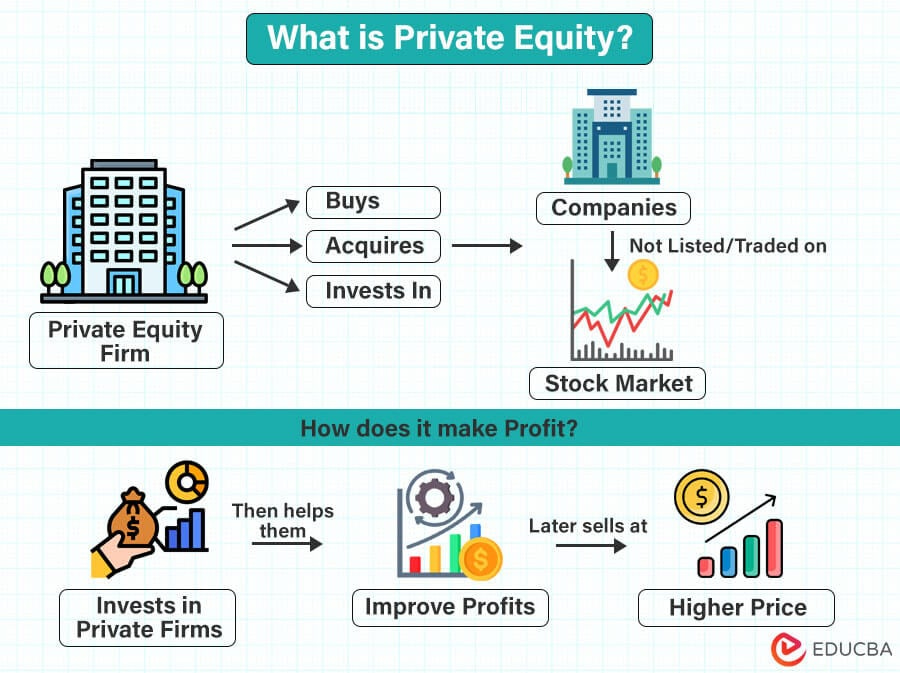
Like much of life in the 2020s the lingering sense of something having “gone wrong” can be traced, at least in part, back to the pandemic years. The circumstances created by lockdowns and generally isolated conditions drove YouTube’s traffic to record levels. In response to this growth, private equity began acquiring YouTube channels as investments, predicting that these platforms would see continual growth as lockdown persisted and our reality grew more remote.
Of course, when lockdowns petered out, viewership numbers fell, which left many of the money men behind these transactions looking at a suddenly more difficult position. Private equity does not conjure money out of thin air, or exclusively source it from allegedly ubiquitous crusading billionaire ideologues who don’t mind losing the money. When Amazon or Softbank loans you tens of millions of dollars to buy a handful of gay little internet TV shows, it would seem prudent to make your payments on time. Shit, as we often observe, rolling downhill, means that the new ownership of these channels are highly incentivized to make their investments pay by any means necessary. More ads, more sponsored content, more revenue streams, more sponsorships for the new revenue streams. If you’ve noticed modern YouTube growing more and more indistinguishable from good old fashioned television, with its relentless commodification of every conceivable element of a given production, it’s not just you. Some acquisitions, such as Task and Purpose and Donut Media have been noticed and remarked on by fans. Others, such as YouTube OG’s Dude Perfect landing nine figures in investment from Highmount Capital and child-pacifying slop mill Cocomelon selling for billions of dollars to a Blackstone-backed media venture, have flown further under the radar.
None of this is sinister or even novel. Big companies acquire smaller companies all the time. The money and material support a larger company can give a smaller subsidiary often allows them to expand their business more quickly and profit by the process. The bigger company then sees their investment pay off in increased revenues and a more valuable new asset in their portfolio. However, explaining this process requires us to confront the vital fact that YouTube channels are companies now. The perception of YouTube as this sort of garage band creative utopia died at the exact moment people began finding money and celebrity on the platform. This is a business, plain and simple. When businesses inhabit gray areas between being a business intending to generate revenues and being something else, it’s inevitable that not everyone ends up on the same page. These private equity cash injections have enriched some, but they’ve left others without the foresight to get things in writing out in the cold. Too often, those cut out from the windfall from a sale of a successful YouTube channel are the ones you’re tuning in weekly to see. Your kid probably thinks their favorite YouTuber is rich, this is almost certainly not the case.
Children perceive YouTube as a desirable career path because of the perception that it’s free from the indignities of the post-industrial rat race but we, as adults, should be able to look deeper than the facade and see the phantom scaffolding of LLC’s and Fiverr freelance editors. The ronin class, hustling for contract work, every multi-million viewed “Oz, the Great and Powerful” spectacle leading back to a small army of men behind curtains in dimly lit studio apartments playing with Adobe Premiere. As screenlife before the advent of Web 2.0 fades further into the rear view mirror, it’s easy to view this all as natural. Younger people certainly do, it’s all they’ve known. However, some of us may pause in a moment’s consideration, feeling some pang of regret that we’ve abdicated millennial dreams of global society, brotherhood through honest dialog, and tech-utopian irreverent recreation in favor of turning cyberspace into another marketplace. Many among us may still consider The Internet to be mankind’s most impressive technological achievement, and we use it to advertise meal plans and pubic hair trimmers to each other. How do we stand the disappointment?
Shell Game
Of course, at no point has YouTube pretended to be anything other than a business. Its runaway success and acquisition by Google is nothing if not a byproduct of the web’s evolution into an explicitly commercial space. If anything, YouTube was foundational to the creation of the “influencer” as the protagonist of the modern Internet. While this archetype may have found the most fertile ground to take root on Instagram, the parasocial grammar of modern for-profit web personae was written by YouTubers. The constant self-selling, the endless dramas of family, spouses, alleged friends, “fake people,” “haters.” The hyphenate celebrity vanity projects, the sketch comics who want to rap, the podcasters who want to box, the vloggers that want to sell you non-FDA-approved supplements. Before they were getting seven figure deals from legacy entertainment companies, before reality-show spinoffs, before cosmetics collaborations, these people were on YouTube, asking you to like, comment, and subscribe to help them chase a dream.
Roughly one percent of all YouTube channels get a firm enough hold on that dream to go “full time” on the platform, using it as their primary source of income. The real number is likely at least a bit higher, accounting for successful hobbyists, YouTube friendly businesses, and independent niche creators who will likely never do anything more than supplement their income on YouTube. Even the lucky full timers can face razor-close margins and the interminable kabuki theater of brand networking before their increased profile can translate into actual money. Even then you’re probably making no more than mid-level office job money. Consider how demoralizing that grind can be for the earnest, motivated indie creator. Now consider how demoralizing it would be if whatever meager progress you’d made over the years was wiped out by changes to the platform itself.
This is one of those things about our screenlives that’s also tempting to see as inevitable. Trends rise and fall. The trend itself is central to the architecture of Web 2.0, which can be understood as an optimized and gamified trend marketplace. Thrift stores and badly-curated Facebook accounts are full of the refuse from yesterday’s billion dollar social media fads. This may sound conspiratorial but when you’re living online, it’s important to consider that the natural forces which shape real life are absent on our screens. Nothing happens for no reason. Tech conglomerates pay whole departments of people handsome salaries to determine how more value can be extracted from the userbase. That data does not go into the trash. Our for-profit web platforms are constantly rearranging the furniture, changing our screenlives as ones become zeroes. Sometimes these changes benefit some people, sometimes they disadvantage people. As you age online and see these changes wipe out whole ways of screenlife, it becomes more difficult to avoid feeling something intentional in them, conscious choices to shape the character of a supposedly-user-driven creative platform.
Once, YouTube was the beating heart of the video-gaming public, changes to ad revenue and content moderation have pushed many successful personalities onto platforms like Twitch. Critics and commentators have long been harassed by abuses of YouTube’s copyright claim system, which affords their users virtually no recourse against claimants. Creators of educational content, many of whom are creating classroom grade documentary material about history, science, and philosophy, are running afoul of automated content moderation and seeing their potential earnings disappear.
Am I reaching to suggest that YouTube is intentionally trying to find excuses to disenfranchise these middle class creators? Is pointing this out conspiracy? Or simple pattern recognition?
Shiny Happy People
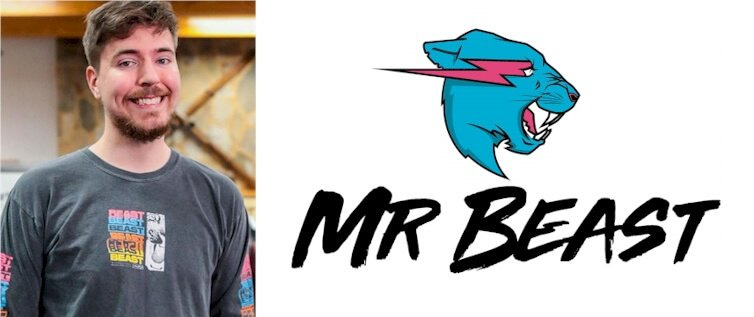
Part of the promised profit we’d reap from the web 2.0 reconfiguration of the internet as a commercial space was that we’d eliminate the filters inherent in traditional media. The infernal credentialism and tastelessness of The Suits would give way to the wisdom of the crowd. What I suppose we failed to consider was that the absence of a traditional hierarchy doesn’t mean automatic utopian egalitarianism, it usually just means the new hierarchy is taking shape. Whether there was ever some edenic period where YouTube functioned as a true meritocracy is up for debate (by someone other than me) but here in 2025 we can see that a profile has emerged. As soon as YouTube professionalized and “YouTuber” became a job title, the Ideal YouTuber could begin to exist in the abstract. Iterations in dominant modes of content and brand-building on YouTube allowed the evolutionary process to kick in, as we drew closer to the optimal model. Mega-successful content moguls like Mr. Beast, KSI, Kai Cenat, and the Paul brothers are the result of this effort towards optimization. They’re not great entertainers so much as they are great distractors, always pushing something new into the ecosystem, battling for market share, sucking up oxygen.Their performative hustling between side hustles and the low-frequency hum of vague, content friendly, interpersonal strife with strange hangers on, feels like hyper-distilled reality. The effect of most modern personality-driven hyper-bandwidth social content isn’t so much a stimulant as it is an anesthetic, the characteristic droning monotone of TikTok or Instagram reels recalling the antiseptic, chemical cleaner taste of an empty vape, an unflinching ironic rictus that vaguely gestures towards a dozen different tones and attitudes but commits to nothing.
As YouTube squeezes out the middle class of the platform to enfranchise its megastars, we see even the dream of joining the Contentocracy fall under threat. It’s depressing that even these meager futures are becoming more and more obscure and harder to reach for the kids that aspire to them. The diminishing of possibility impoverishes us all, in spiritual terms. Maybe we mock the kids who obsess over these well-heeled slop merchants because the alternative would be admitting that we’ve left them a future with nothing better to aspire to. Another future welded shut for insufficient profit potential.
A lot of hacks support themselves on YouTube. For every genius there’s ten thousand mediocrities. Acres of rotund millennials in their videogame paraphernalia bunkers who’ve read one book on criticism and decided they can't rest until every cartoon aired between 1987 and 2005 had been discussed for thirty hours or more. There’s the shit-eating onanism of “react” channels, where popular videos taken on hellish new lives as xeroxes for other guys to doodle on. There’s the willful, intentional cruelty leveled on so-called lolcows like Chris-Chan and KingCobraJFS. A plunge into the depths of YouTube will bring you face to face with a menagerie of sad lonely freaks with single digit subscriber accounts posting shockingly vulnerable and honest videos where they attempt to spontaneously evolve their lives into works of performance art, hoping that attention will inject meaning. The mediocre are worth advocating for as well. They almost always are. Too often, when negotiating against the hoarding of opportunity by the rich and the narrowing of modern life’s possibilities by austerity, we can only defend ourselves with geniuses. The actor who overcame a speech impediment with state-funded therapy, the Nobel laureate who grew up on food stamps and welfare, the star athlete who had to wear mis-sized Salvation Army shoes to practice. The geniuses platformed, enabled, and enriched by YouTube are all testaments to the potential of modernity but they share a vital quality with the honest dirtbags lucky enough to find their golden tickets cooking or gaming or podcasting on YouTube. The beauty of the net as we know it is that the gifted and the average alike are free to aspire, dream, and pursue their passions. YouTube’s betrayal of the dreamers and hobbyists who built their platform is just another chapter in a long, sad slide into a future where platforms meant to enrich our lives and enable human flourishing dominate our every moment and hyper-optimize it for profit.
the internet was only cool when the rest of life didn’t revolve around it… thanks for writing
Sad reality I’m seeing with my own content. I’ve always been a hobbyist youtuber - operating in the 1000s of views. Now I’m lucky if I get a few hundred.